
As part of the 10th Orientation Programme, the Institute of Design, Nirma University, organised a series of engaging creative workshops for newly admitted Bachelor of Design (B.Des) students from July 20 to July 24, 2026. The workshops were designed to introduce future designers to creative thinking, hands-on learning, material exploration and the fundamentals of the design process. The five-day programme featured three specialised workshops — ‘Colour and Nature’, ‘Wire & Form’ and ‘Play & Invent’ — conducted under the guidance of experienced faculty members of the Institute of Design.
Wire & Form Workshop :
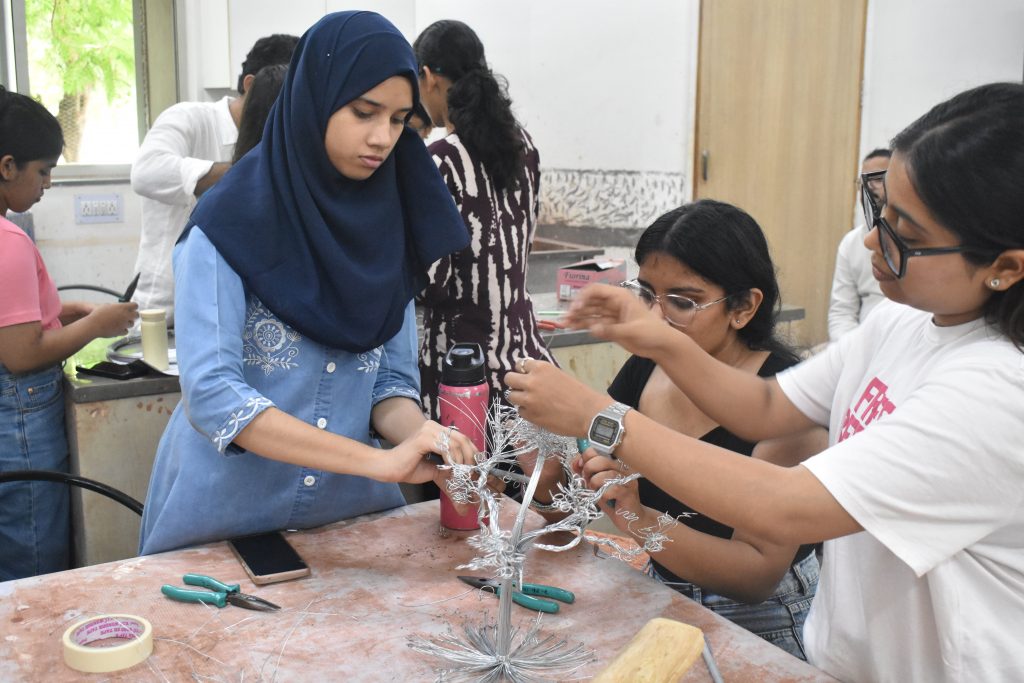
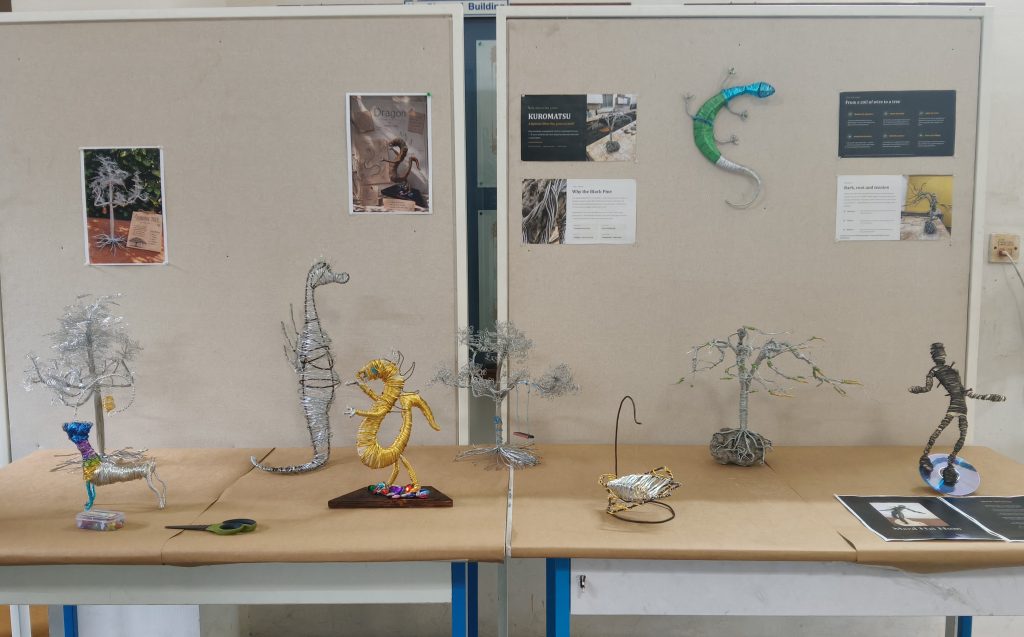
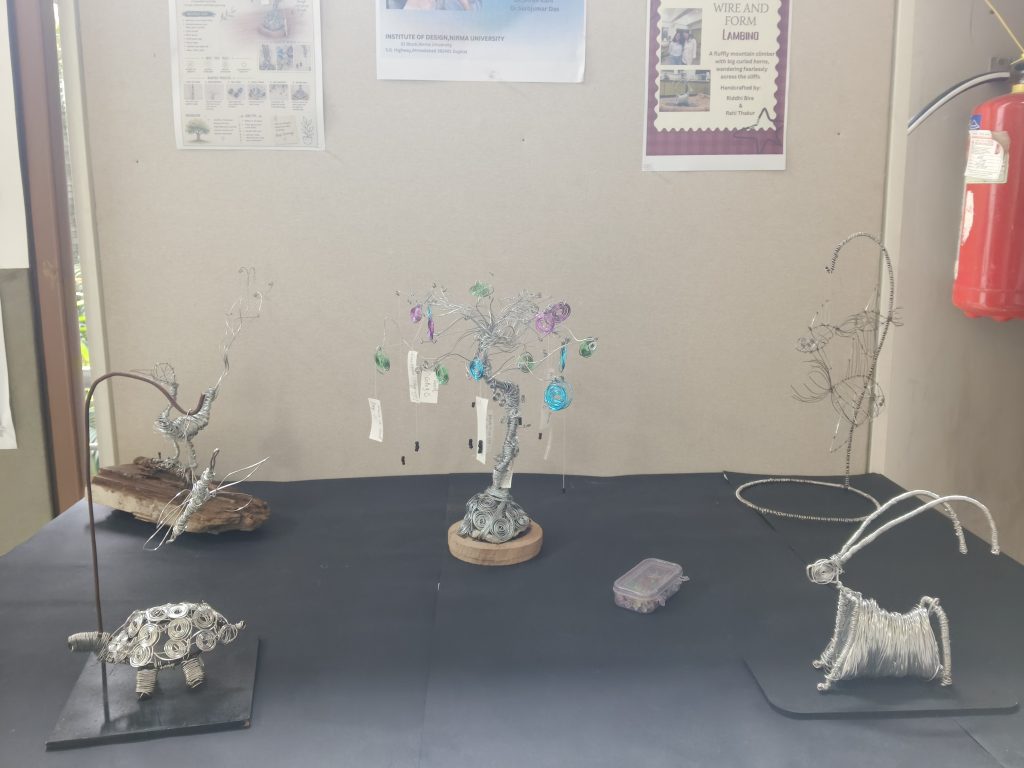
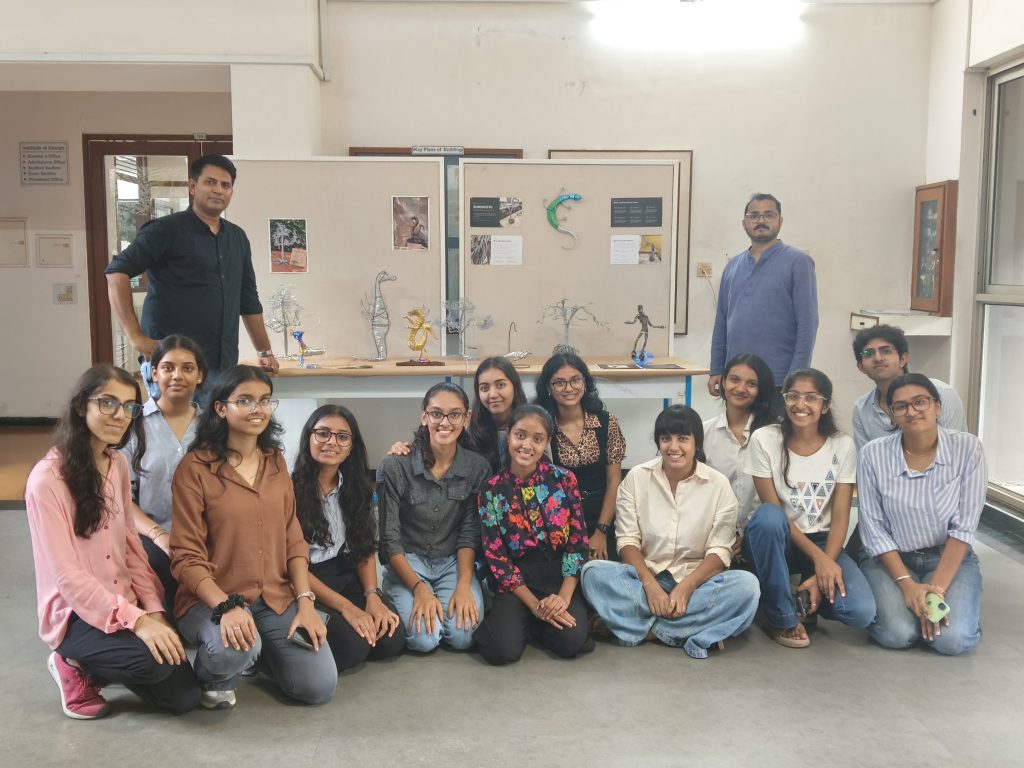
The workshop was conducted by the institute’s faculty members Dr. Saroj Kumar Das and Dr. Shree Kant, engaging students in exploring the creative and structural possibilities of metal wire as a design material. It aimed to develop their understanding of three-dimensional visualisation, spatial thinking, and material behaviour through hands-on experimentation. Beginning with simple two-dimensional shapes, geometric compositions, and basic wire forms, students gradually gained confidence in manipulating the tensile properties of metal wire. A key highlight of the workshop was a collaborative project in which students worked together to create expressive three-dimensional bonsai tree sculptures. The process encouraged teamwork, experimentation, and creative problem-solving, resulting in imaginative forms that resembled symbolic “Wish Trees” and “Trees of Wisdom.”
Building on this experience, students developed individual wire sculptures inspired by birds, animals, insects, and other natural forms. Each student’s work reflected a unique learning journey while strengthening observation skills, structural understanding, creativity, and confidence in material exploration. The workshop concluded with an exhibition showcasing both the collaborative installation and individual sculptures, providing an opportunity for faculty and peers to appreciate the students’ creativity and celebrate their first exploration into three-dimensional form-making. The workshop laid a strong foundation for their future design education and creative practice.
Play & Invent workshop:
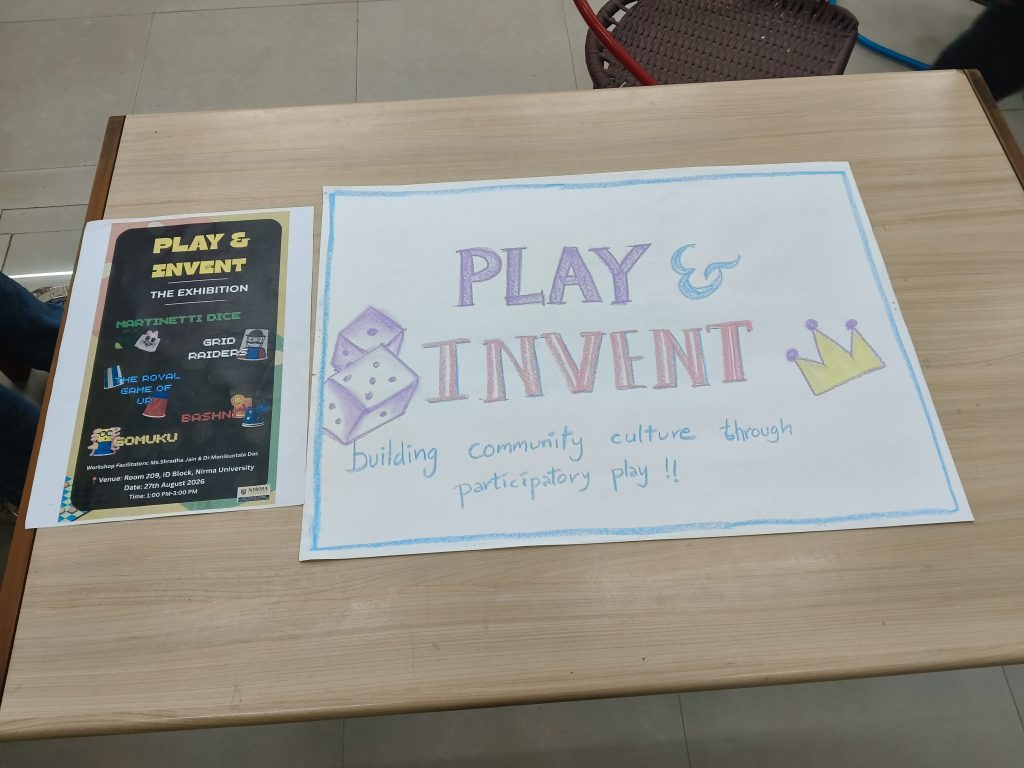
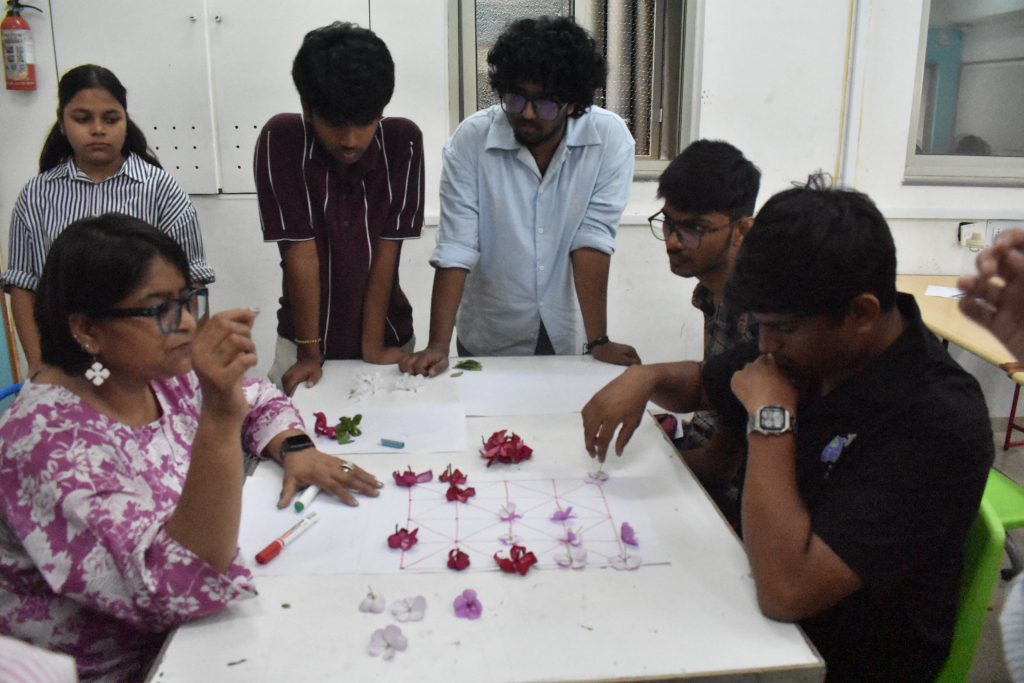
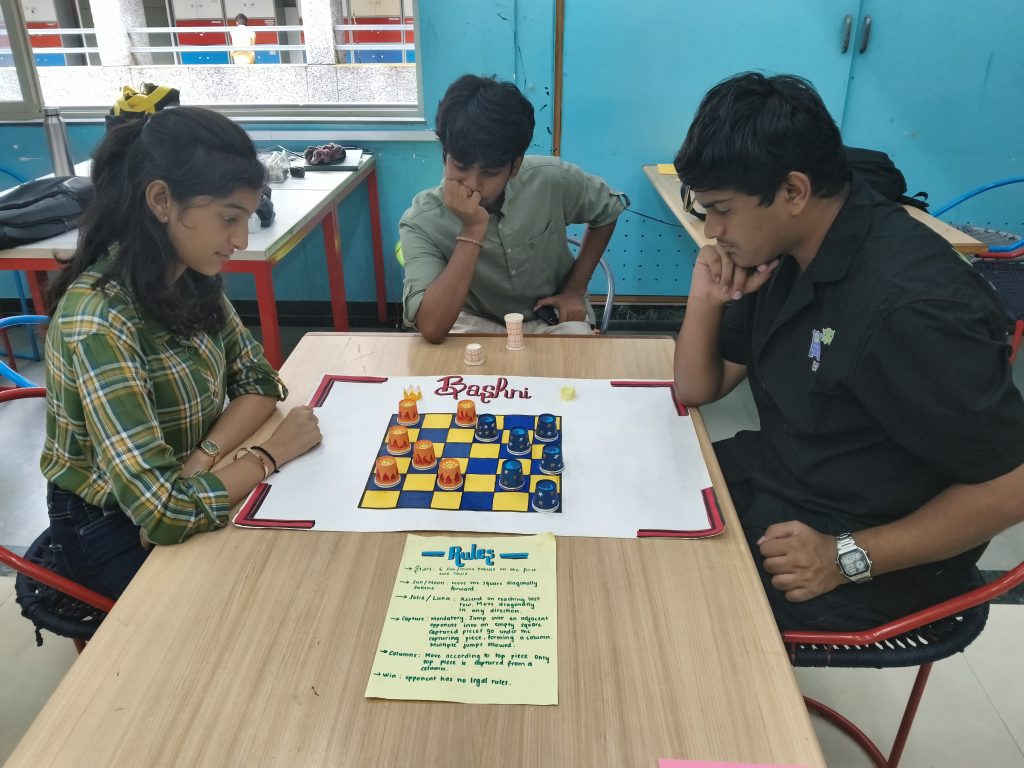
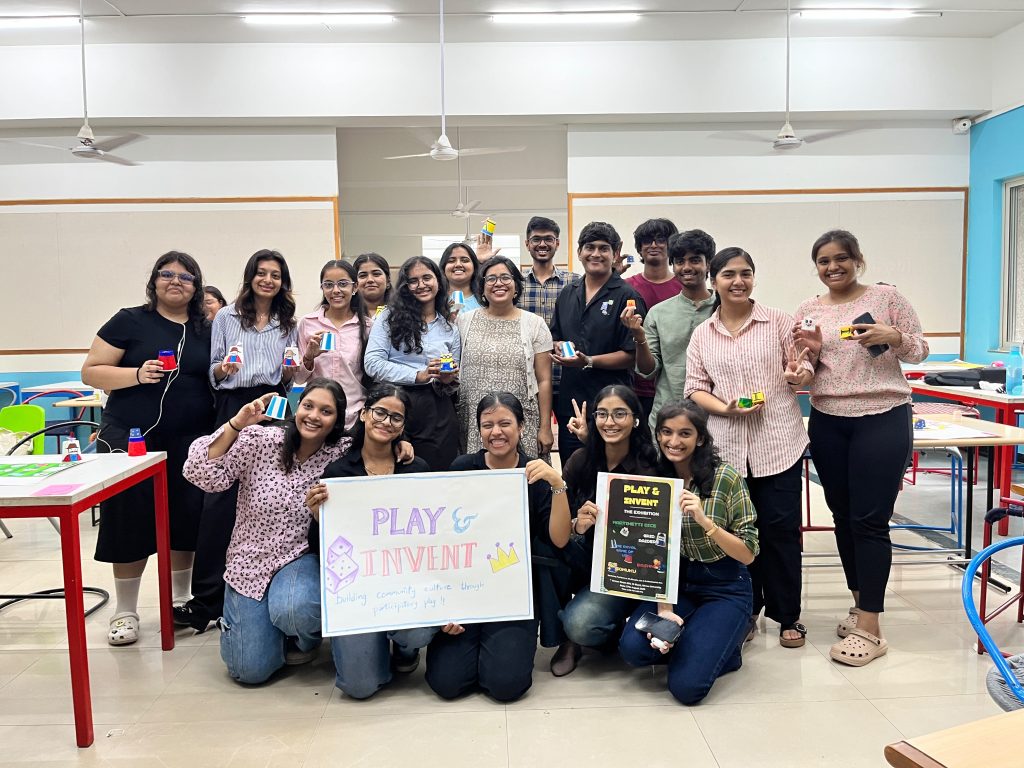
The ‘Play & Invent’ workshop was facilitated by Monikuntala Das and Shradha Jain. The workshop invited students to revisit beloved childhood games such as Gold Spot, Snakes and Ladders, and Pachisi through the lens of upcycling and sustainable design. Using cardboard, paper, and found materials, first-year design students transformed traditional two-player games into engaging multiplayer experiences.
Blending nostalgia, sustainability, and playful innovation, the workshop introduced students to the core principles of design thinking through collaborative exploration, experimentation, and hands-on making. The orientation workshops provided students with a strong foundation in creative problem-solving, teamwork, material exploration, and design thinking, marking an inspiring beginning to their journey as emerging designers at the Institute of Design, Nirma University.
Colour and Nature Workshop:
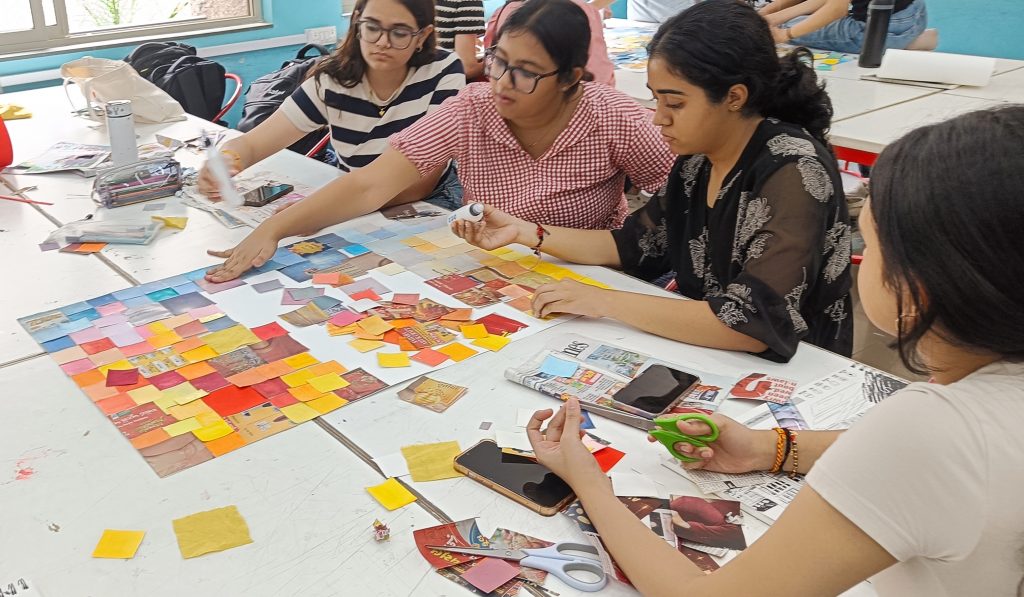
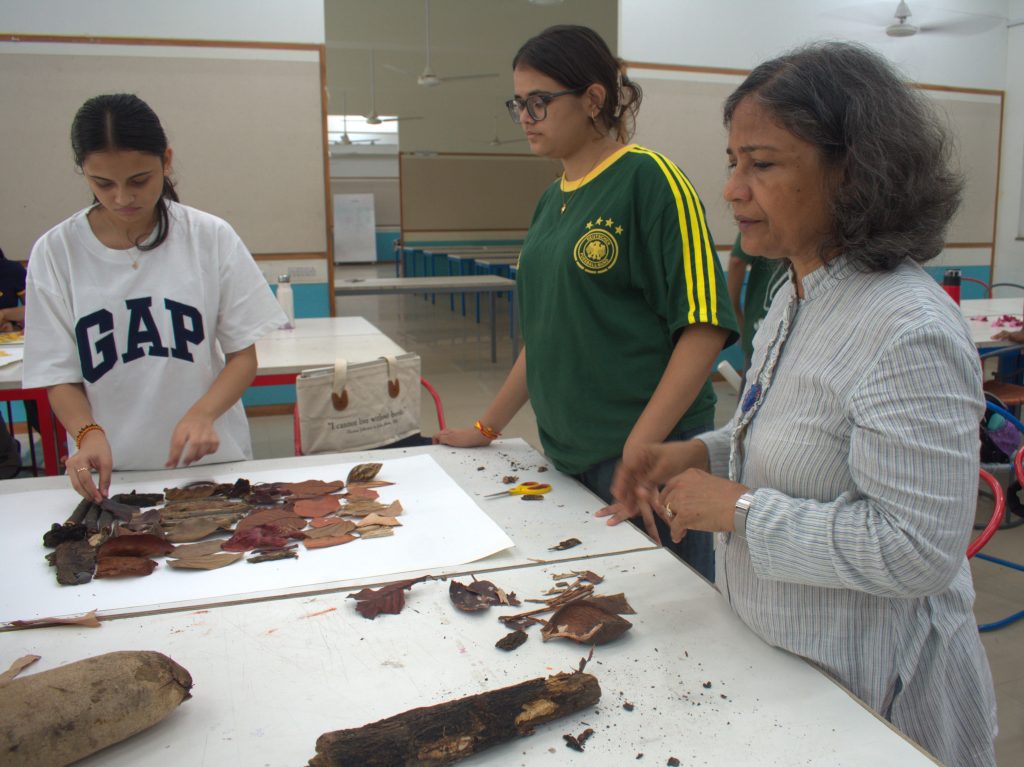
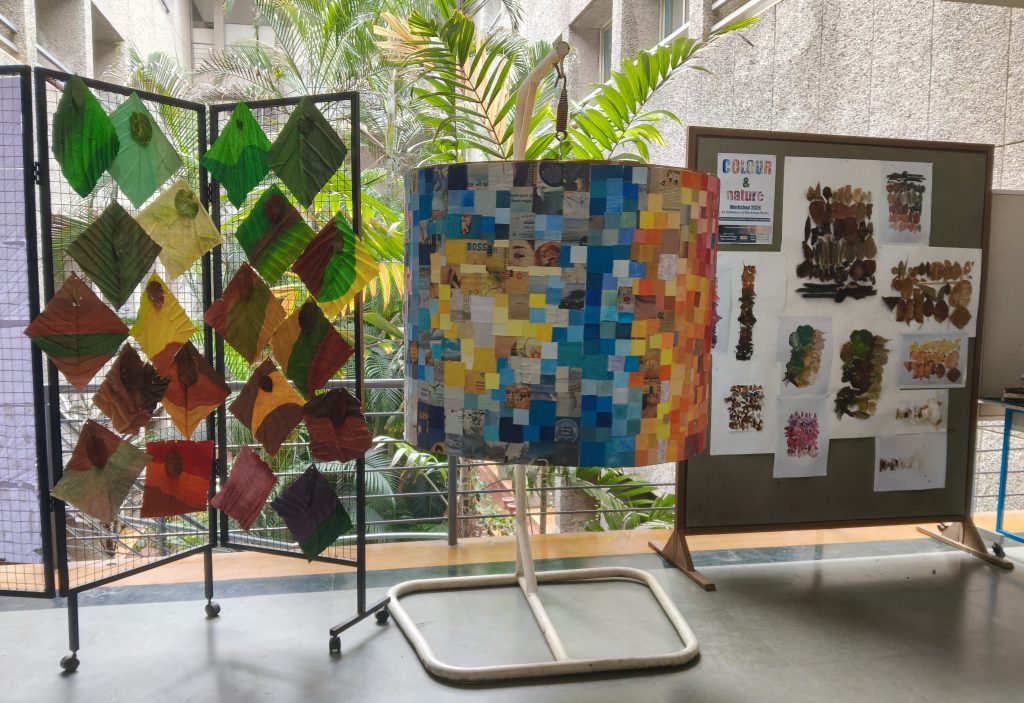
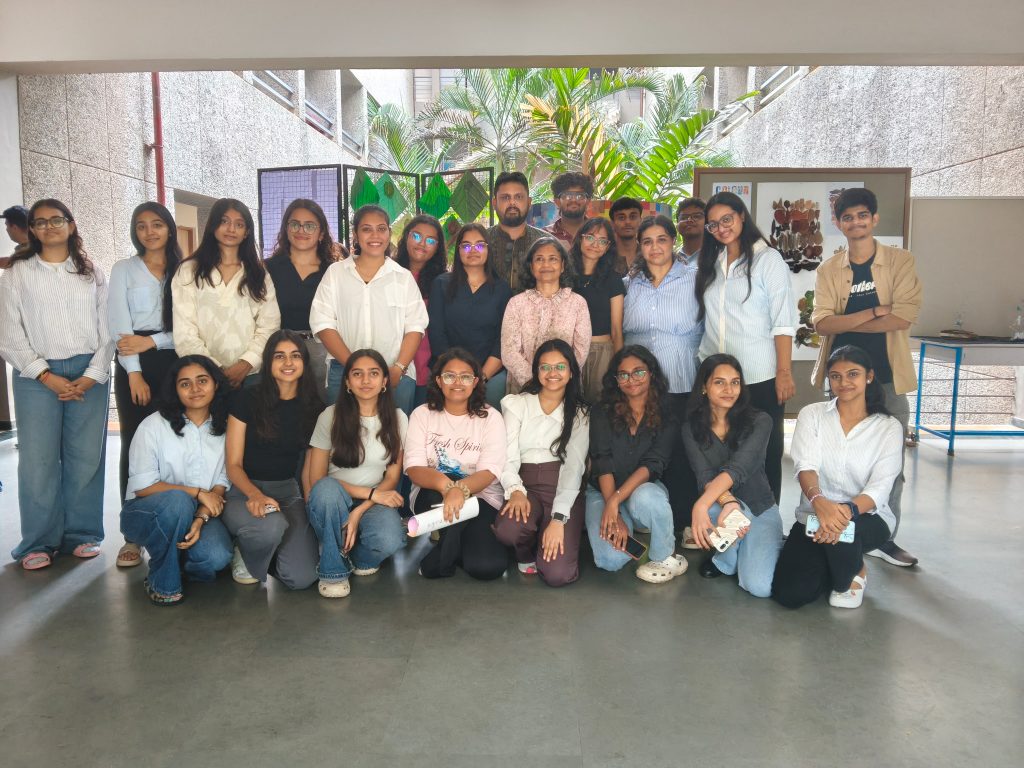
The Colour and Nature Workshop offered a five-day immersive learning experience that encouraged students to explore the relationship between colour, nature, observation, and creative expression. The workshop was conducted by the Institute’s faculty members, Pradipta Biswas and Mona Shah, who guided students through a range of engaging activities and creative explorations.
The workshop began with activities centred on observing and collecting colours from the surrounding environment, enabling students to develop a keen eye for the subtle variations present in nature. Building on these observations, they interpreted natural phenomena such as dawn, sunset, the monsoon, and moonlit nights by creating colour palettes and collaborative murals. Students also explored the interplay of light, shadow, texture, and form by extracting colours from natural elements and transforming their observations into three-dimensional compositions using mixed media. Emphasising collaboration and visual communication, the workshop guided students in creating nature-inspired mood boards that conveyed themes through imagery, colour, and texture. On the final day, students installed and presented their collaborative works, gaining valuable experience in exhibition design, presentation skills, and reflective discussion.
The workshop provided an engaging platform for students to strengthen their observational abilities, experiment with materials and colour, and appreciate the role of nature as a source of creative inspiration. It also fostered teamwork, critical thinking, and confidence in presenting design ideas, laying a strong foundation for their journey in design education.
These all workshops provided students with opportunities to explore creativity, experiment with diverse materials and collaborate through experiential learning.